
[ Local SEO · ROOM FILE ]
Local Map Pack Domination: A Practical Playbook
Getting into the 3-pack is a process, not a trick. Here's the practical sequence I run to move a business into the map pack — and keep it there once it arrives.

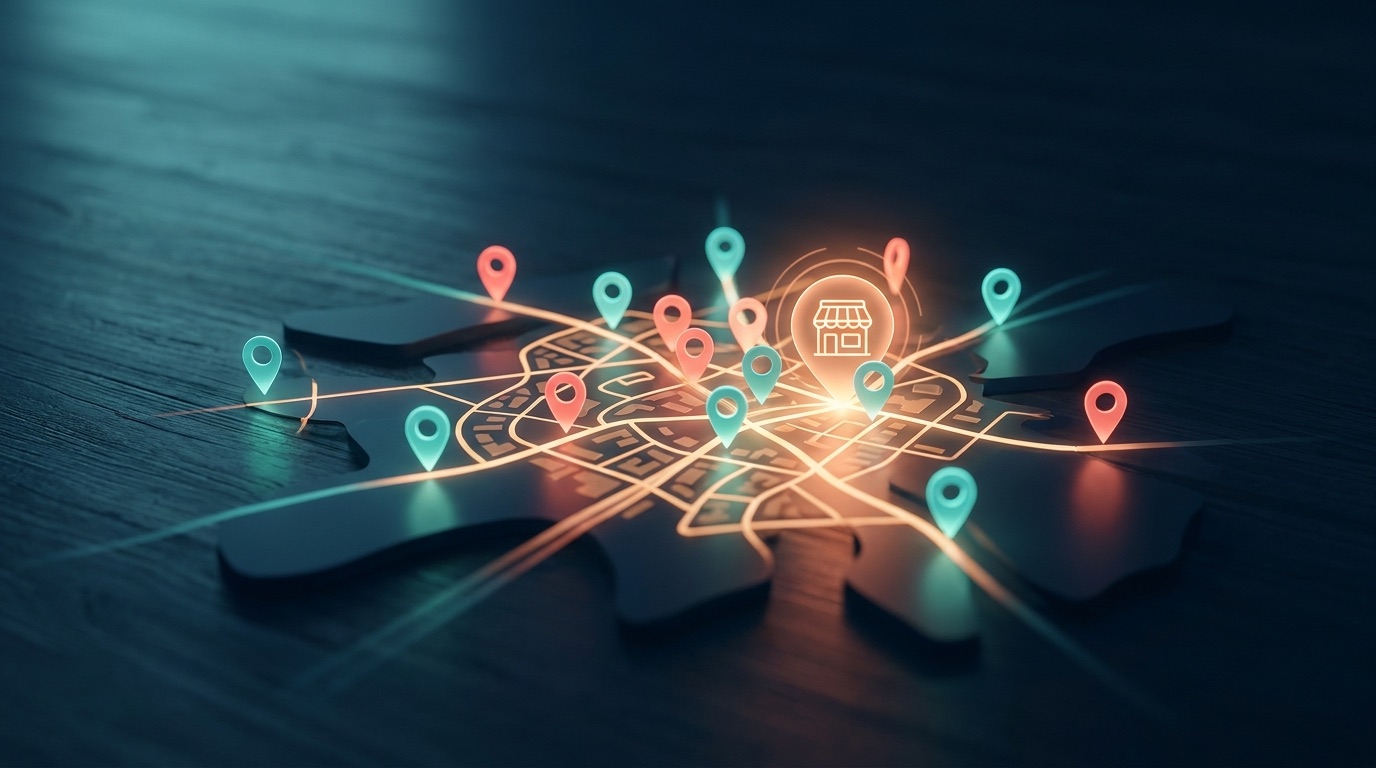
The local 3-pack — those three businesses Google features on the map above the organic results — is the most valuable position in local search. It captures the lion's share of clicks and calls, and for a lot of "near me" searches, it's effectively the whole game. Below it, you're fighting for attention. Inside it, customers come to you.
Getting there isn't luck and it isn't a single trick. It's a sequence. Do the steps in order and each one makes the next one easier. Do them out of order and you'll pour effort into levers that can't move until the foundation beneath them is solid. Here's the playbook I actually run.
Step one: get the foundation right
Before you chase rankings, you make yourself legible to Google. That starts with a claimed, verified Google Business Profile and a business identity that's identical everywhere it appears. Your name, address, and phone number have to match — exactly — across your website, your profile, and every directory that lists you.
This sounds tedious because it is, and it's also non-negotiable. Conflicting information is the most common reason a good business underperforms in local search. When Google sees three different phone numbers or two spellings of your address, it loses confidence, and lost confidence caps how high it will ever rank you. Fix this first and you remove the ceiling before you try to climb.
Step two: sharpen relevance
With the foundation clean, you make the engine understand exactly what you do and where. Relevance is where the fastest wins usually hide.
- Set your primary category to the most precise option that describes your core service, then add every secondary category that genuinely applies.
- Build out your services and products with the language customers actually use to search, not internal jargon.
- Write a business description that states plainly who you serve, what you do, and the areas you cover.
- Make sure your website backs all of it up with real pages for your core services and the places you serve.
The goal is zero ambiguity. When a searcher asks for what you offer in the place you offer it, every signal on your profile and site should point the same direction. That alignment is what tells Google you're the relevant answer.
Step three: build prominence
Foundation and relevance get you eligible. Prominence gets you promoted. This is the trust and authority layer, and it's what separates the businesses in the pack from the ones stuck just below it. Two levers do most of the work: reviews and links.
Reviews are the clearest prominence signal in local search. You want a steady, ongoing flow — not a one-time push — because velocity and recency matter as much as volume. Build a simple system that asks every happy customer at the right moment and makes leaving a review effortless. Then reply to every one, positive or negative, because engaged profiles read as active, trustworthy businesses.
Links and mentions from other credible local sources — your chamber of commerce, local news, industry directories, community sponsorships — tell Google you're a real, established part of your market. You don't need hundreds. You need genuine ones from places that matter locally.
Businesses ask me for the one hack that unlocks the 3-pack. The honest answer is that there isn't one — there's a sequence, run patiently. The patience is the hack.
— Bodhi
Step four: measure where you actually rank
Local ranking isn't a single number — it changes with the searcher's location. You might dominate the pack from your storefront and vanish two miles away. That's why a flat "we rank third" tells you almost nothing.
The tool that matters here is a geo-grid or heatmap that shows your ranking across a spread of points around your service area. It turns an invisible problem into a map: green where you win, red where you don't. Now your effort has a target. You know which neighborhoods to strengthen and can watch them shift color as the work lands.
Step five: hold the position
Earning a spot is only half the job. The pack is contested constantly, and the businesses that hold their ground are the ones that never coast. Keep the review flow steady. Keep your profile fresh with photos and current information. Keep an eye on your geo-grid so a slip shows up as a color change before it becomes a lost customer.
Run this sequence with discipline and the 3-pack stops being a lottery you hope to win. It becomes a position you built on purpose — and one your competitors will struggle to take from you, because they'd have to out-work every step you already own.
Questions Bodhi Hears Often
How long does it take to break into the 3-pack?
It depends on how competitive your market is and how solid your foundation was to begin with. Relevance fixes like categories can move things in weeks; prominence built through reviews and links compounds over months. The businesses that get there fastest are usually the ones that had accuracy problems holding them back — fixing those can unlock quick gains.
Why do I rank well from my office but disappear a few miles away?
Because distance is a core local ranking factor, and it's measured from the searcher, not from you. Ranking naturally fades as you move away from your location. A geo-grid heatmap shows you exactly where your visibility drops off, so you can focus on strengthening prominence and relevance for the areas that matter most to your business.
Do I need a physical storefront to rank in the map pack?
Not necessarily. Service-area businesses can rank without a public storefront by defining their service areas correctly and building the same relevance and prominence signals. The playbook is the same — the main difference is how you configure your service area versus a fixed address.
[ YOUR MOVE ]
Let's turn this into a plan for your business.
Everything here is what I do every day for Bonsai Marketing's clients. Come see what it looks like for you.
Explore: Free Business Assessment · Meet Bodhi · BonsaiX™ Platform · All articles